

Expertise creates business value when someone can understand it, trust it, and act on it. Five conversations at the Women in Sales Retreat in New Orleans gave me practical ways to examine where that process gets stuck.
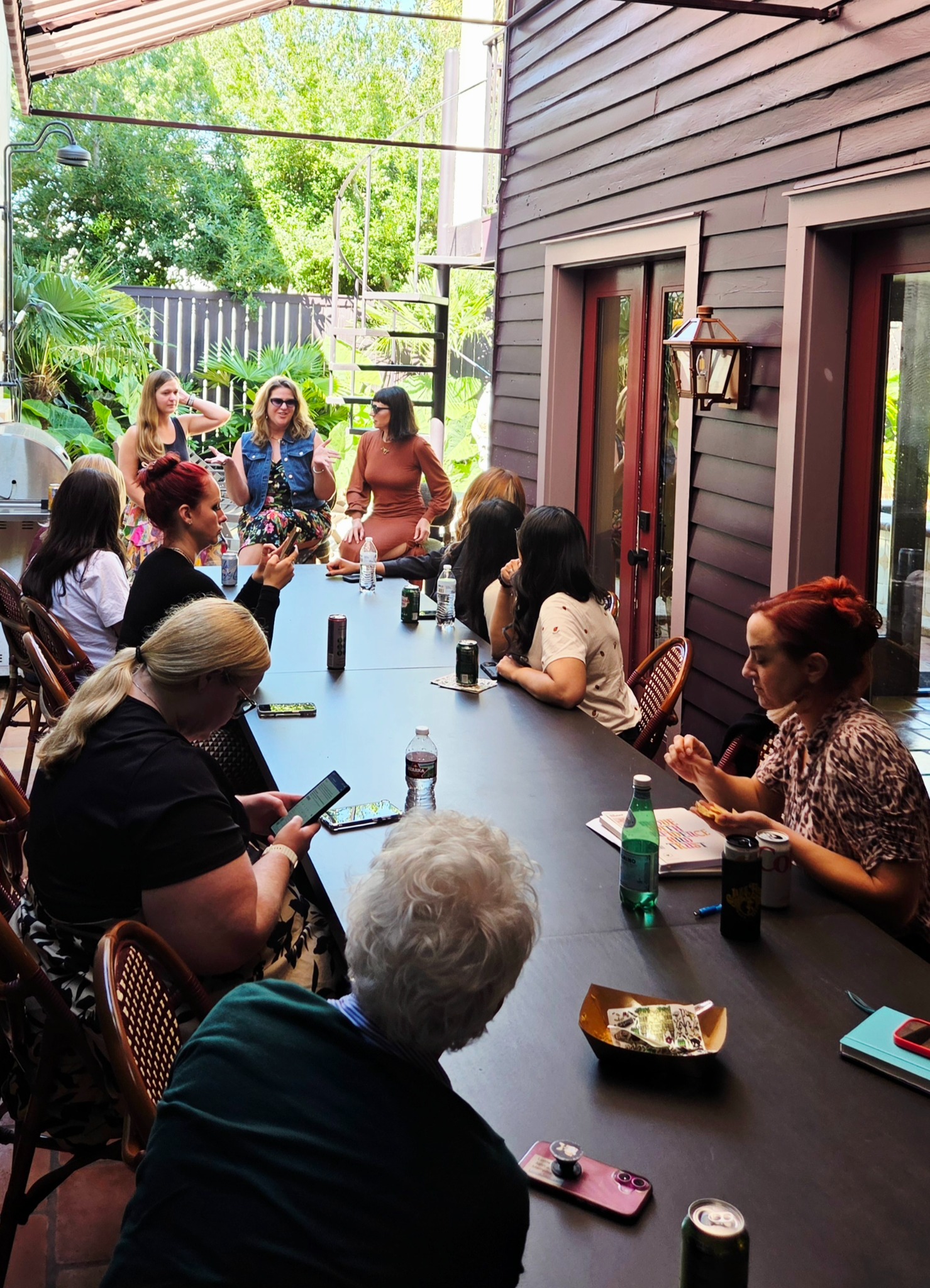
We talked about buyers, compensation, responsibility, AI, and the decision to build a business. I joined Morgan S. Abreu and Shannon Plumb for the side-hustle-to-main-hustle panel. I also spent plenty of time listening.
There were sequins. There were very direct conversations about money. My kind of week.
These are the lessons I’m taking into my work at Lighthouse, and five questions you can use in yours.
1. Understand what the buyer needs to decide
Anita Nielsen presented her Buyerarchy of Needs® framework, describing three levels of buyer needs: operational, emotional, and personal. A product may meet a functional requirement while the person buying it still needs confidence about the decision and its consequences.
One example from her session stayed with me: a sales presentation assumed a buyer would prefer operating expenditure to capital expenditure. The buyer’s preference went the other way. The pitch had been built around an assumption that discovery could have corrected.
She also cautioned against rushing into personal territory. Trust develops through what you do and how reliably you do it. You earn the next conversation.
My application: Before rewriting the pitch, identify what you know about the buyer’s situation and what you’ve assumed. This is part of the work we practice in BetterStory Studio™ and sales working sessions: explain why the expertise matters to the person making the decision.
Ask: Can I describe what this buyer needs to accomplish without mentioning my product?
2. Understand the terms behind the number
Rebecca Grimes made compensation concrete. Her session examined the full package, including the timing of variable pay, the rules for account credit, development opportunities, and the questions people need to ask about equity.
Her insistence on written terms matters. A promising conversation can leave two people with different understandings of what has been agreed.
For me, that applies to the commercial side of expertise too. When we discuss an advisory engagement, a partnership, or a new responsibility, we need to understand the work, the expectations, and the terms. A headline number leaves plenty unanswered.
My application: Put the proposed contribution and the agreed return next to each other. Identify the questions that still need an answer before you commit.
Ask: What am I agreeing to deliver, and which terms still need to be made explicit?
3. Clarify what you own, influence, or release
Elisa Hawkins introduced an ownership filter grounded in her own experience leading a struggling sales team. She separated the coaching and clarity she could provide from decisions and actions that belonged to other people.
That distinction prompted a useful discussion about capable people absorbing work. When another priority arrives, what changes about the priorities already assigned? Who has the authority to make that call?
My application: In leadership advisory, I want to see the decision itself: who owns it, who contributes, and what happens when there’s disagreement. Responsibility becomes easier to act on when people can name those boundaries.
Ask: Do I own this decision, can I influence it, or have I reached the point where I need to release it?
4. Decide where human judgment stays in the AI workflow
Liz Klebba shared practical ways to use AI in go-to-market work, including account research, call preparation, relevant customer examples, and follow-up drafts.
She described reviewing messages herself before sending them and taking time to understand a prospect’s business. Her examples connected preparation with the personal contact before and after a meeting or event.
My application: For each workflow, name the task AI supports, the person who checks the output, and the customer decision the work is supposed to help. Then decide what to do with the time recovered.
Ask: What has AI made faster, and what human work will we give that time to?
5. Let buyer conversations inform the business you build
During our panel, Morgan S. Abreu described how conversations about referrals helped her identify the opportunity that became Referral Reef. Her original plan changed as she learned what people needed.
Shannon Plumb spoke about the difficulty of explaining and selling your own expertise after years of selling inside a company. I recognized that immediately.
I talked about building work around the abilities I had used throughout my corporate career: relationships, commercial judgment, and helping people explain what they can do. In-person dinners and live working sessions became ways for people to experience that work.
My application: Choose a specific problem and a person who might pay to solve it. Have the conversation. Pay attention to the questions, objections, and requests that follow. Those responses can inform the next version of the offer.
Ask: What could someone pay me to solve with the expertise I already have?
The leadership decision behind the time AI saves
A Dropbox article by Dale Shearin, published October 20, gave me another way to connect these conversations. Dropbox’s internal research found that managers of employees with both high engagement and high performance were more than twice as likely to reinvest AI time savings in coaching, one-on-ones, and development.
It’s an association observed inside Dropbox, rather than proof that one practice caused the outcome. It gives leaders a useful question to investigate in their own organizations.
My conclusion: when technology creates capacity, someone still has to decide how that capacity gets used. A better buyer conversation, clearer expectations, or focused coaching could be a deliberate choice.
Put one decision on the calendar
At Lighthouse, the Human Value Gap™ describes the distance between what an organization could create and what people turn into results:
Possibility → Judgment → Trust → Decision → Action → Value
These conversations give us specific places to examine that distance. Take ten minutes with one of these questions:
- Buyer: What does the person making the decision need to accomplish?
- Terms: What contribution and return need to be made explicit?
- Authority: What do I own, influence, or release?
- AI: What will I do with the time I’ve recovered?
- Offer: What could someone pay me to solve?
Write down your answer, the decision it requires, and who owns the next step. Give that step a date.
Thank you to Anita, Rebecca, Elisa, Liz, Morgan, Shannon, and Women in Sales for the expertise and candor. I’m grateful to have contributed to this week and to have learned so much from it.
Based on Kristi Straw’s participation and session recordings from the Women in Sales Retreat, October 20–23, 2026. Session descriptions are paraphrases; applications and questions are Kristi’s interpretations. Research source: Dale Shearin, Dropbox, linked above.